

 May 29, 2026
  6 min read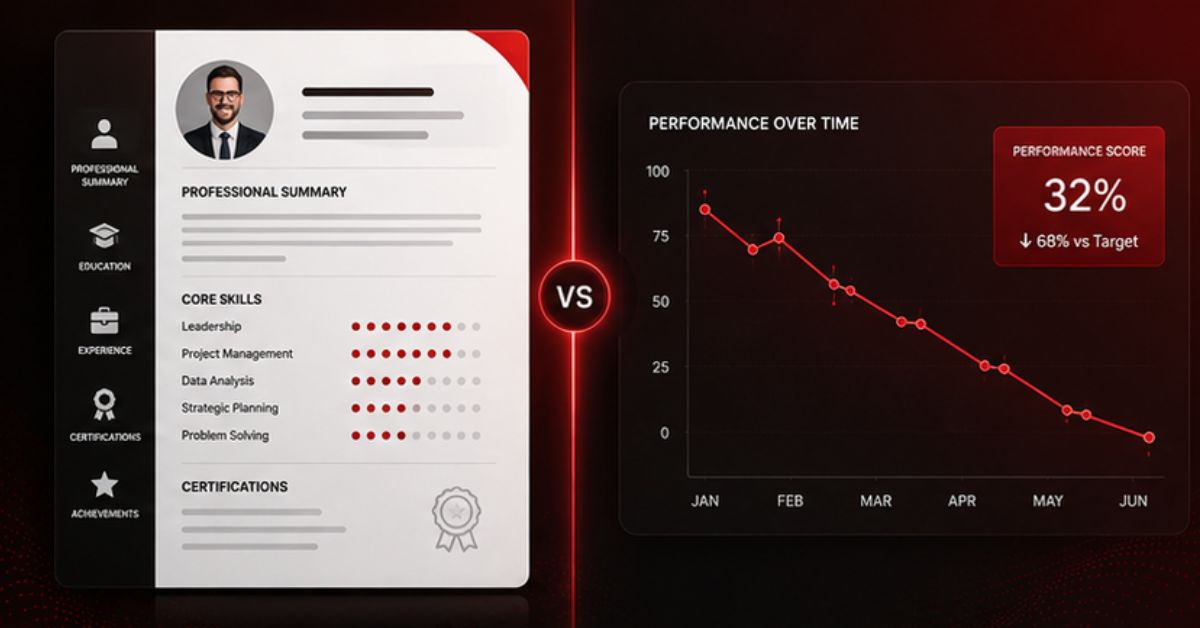
Hiring based on skills feels logical. If the role requires data analysis, stakeholder management, and project delivery, hire the person who has all three. The problem is that skills tell you what someone can do today. But they don’t predict job success. They say nothing about how they will perform under pressure, whether they can adapt as the role evolves, or whether they will still be delivering results 18 months from now.
What Actually Predicts Job Performance
General cognitive ability has consistently been found to be one of the strongest predictors of job performance across roles, industries, and seniority levels. Personality, specifically conscientiousness, is also a strong predictor. While relevant experience and years of education tend to rank lower. These findings highlight the value of evidence-based hiring approaches. They look beyond traditional credentials and focus on indicators more closely linked to long-term performance.
This does not mean skills are irrelevant. They are necessary as a baseline filter. But treating skills as the primary hire decision produces predictable results: candidates who look strong on paper, pass the interview, and underperform once in the role. An employee will always do better in a role that fits their cognitive abilities, interests, and personality traits than in one that does not, regardless of the technical qualifications they bring.
The concept of job matching, aligning cognitive ability, interests, and personality to role requirements, is precisely what separates organisations with consistently high-performing hires from those that remain stuck in a cycle of mis-hires, performance management, and replacement.
What a CV Cannot Measure
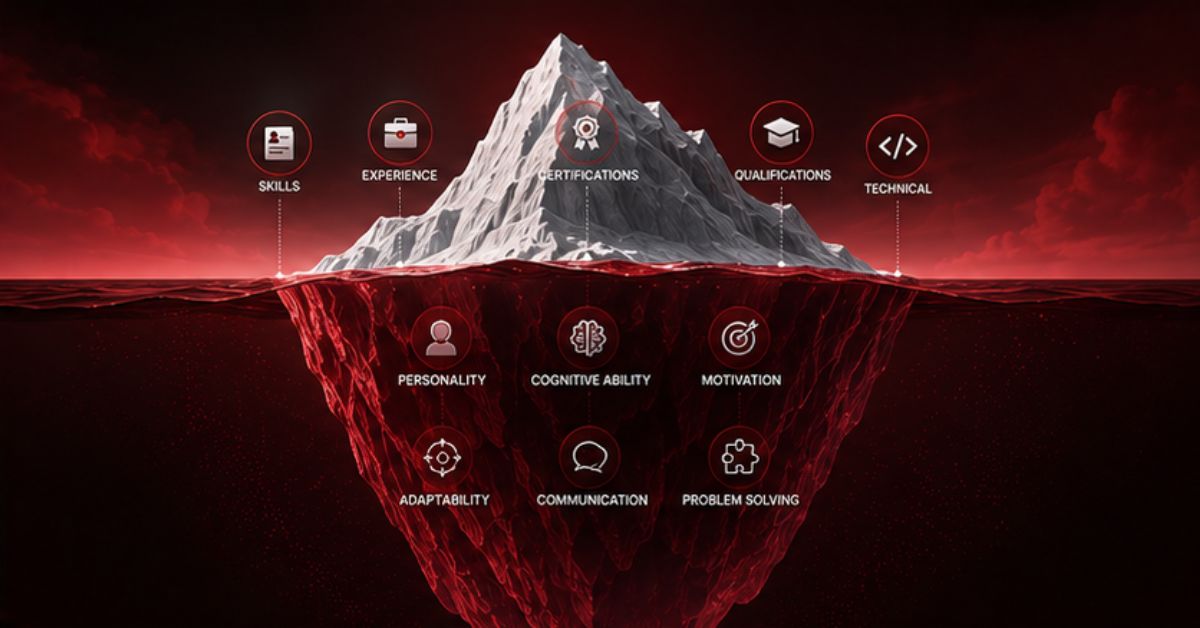
A CV tells you what someone has done. What it cannot tell you is how they will behave when they encounter a problem they have never seen before, how they will respond when priorities shift unexpectedly, or how they will hold up in a team environment where demands are high and ambiguity is the norm. The traits that determine those outcomes are deeper than skills, and all of them are measurable.
- Cognitive ability: The capacity to learn, process information, and solve novel problems. An employee with strong cognitive ability picks up new systems faster, identifies risks earlier, and makes better decisions with incomplete information. A candidate with an impressive skills list but limited cognitive capacity will struggle the moment the role evolves beyond its original scope. A Cognitive Ability Profile assessment gives you a norm-referenced measure of how someone learns and solves problems under pressure. That tells you far more about future performance than any CV ever will.
- Conscientiousness: Conscientiousness is the personality trait most consistently linked to job performance across every role and industry. A technically skilled but low-conscientious hire produces inconsistent output, misses deadlines, and requires constant management. Using assessments such as a Job Fit Profile measures personality alongside cognitive ability and vocational interests, surfacing this before the offer is made rather than after probation has ended.
- Learning agility: The ability and motivation to learn from experience and apply new thinking to unfamiliar challenges. In any environment where roles evolve quickly, learning agility is more valuable than today’s skill set. A candidate with the right skills today but low learning agility will need replacing in two years. A candidate with moderate current skills but high learning agility will likely outperform them long before that.
- Motivational fit: Employees whose internal drivers align with what the role and organisation genuinely offer are more engaged and less likely to leave. A Job Motivation Profile can support by identifying a candidate’s internal drivers and motivational intensity, helping managers match people to roles that will sustain their commitment beyond the initial months.
- Tenacity and resilience: In roles with high workloads, client-facing demands, or constant change, staying power is a performance predictor in its own right. By assessing perseverance, grit, and goal orientation, you can identify the traits that distinguish employees who grow through adversity from those who exit when conditions become difficult.
The Real Cost of Getting This Wrong
Organisations are not failing because they hire too slowly, they fail because they hire inaccurately. Roles get filled, offers get accepted, teams grow. Yet turnover remains high, performance lags, and managers spend months correcting misalignment. The problem is not a lack of talent. It is poor matching.
According to SHRM, a mis-hire costs between 50% and 200% of the individual’s annual salary when recruitment, onboarding, lost productivity, and t eam disruption are included. In revenue-generating or leadership roles, the figure is considerably higher. Skills-only hiring does not eliminate this risk. It systematically creates it by screening for the wrong variable.
The pattern is familiar to most HR professionals: the candidate interviews confidently, the CV is impressive, they are hired. Within six months, performance issues emerge. The skills are there, but the motivation, adaptability, or behavioural pattern is not. The hiring process never measured for any of those things.
A Three-Stage Framework That Actually Works
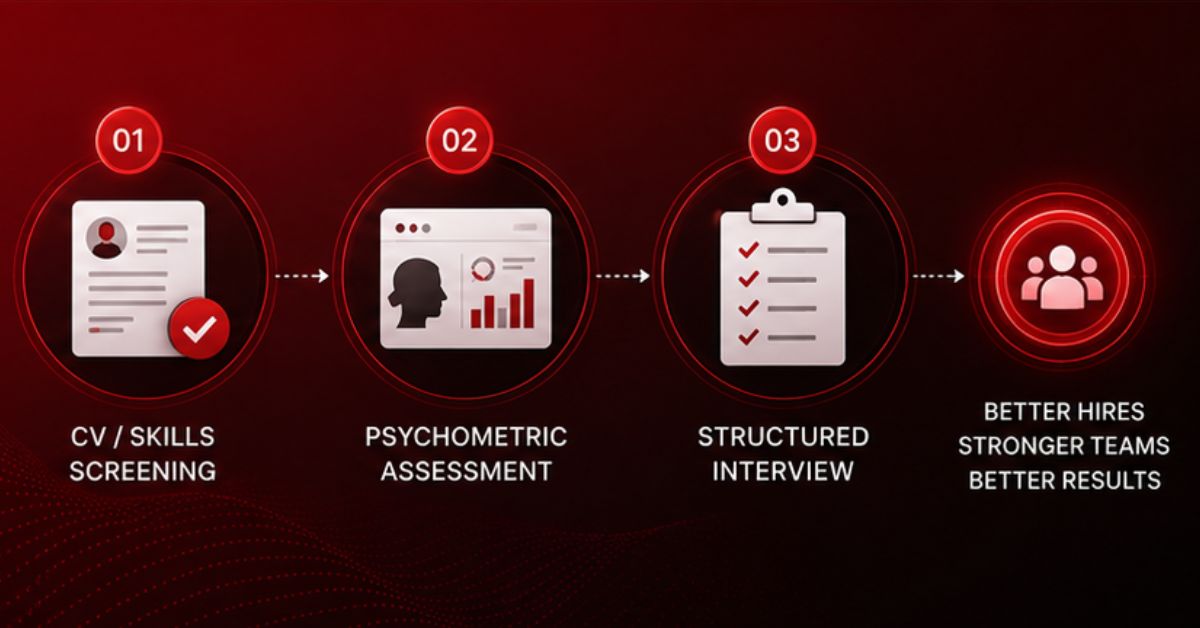
Skills are the entry point to a hire decision, not the decision itself. A stronger framework evaluates candidates at three levels:
- Threshold skills screening: Confirm that candidates meet the minimum technical requirements for the role. This helps efficiently filter out unsuitable applicants early, without creating shortlists based solely on impressive resumes that lack key predictive indicators. A basic mental ability assessment can serve as an effective first-stage screen for foundational numerical and verbal reasoning, particularly in high-volume recruitment or entry-level hiring.
- Validated psychometric assessment: This is where the most differentiated information sits. Comprehensive assessment frameworks can evaluate areas such as cognitive ability, personality, learning agility, motivational fit, and resilience through validated, benchmarked instruments designed for hiring decisions. Job fit assessments are especially valuable, as they combine cognitive, personality, and interest-based data into a single, holistic evaluation.
- Structured behavioural interview: Use structured interview questions to probe for evidence of the traits the assessments have surfaced. This triangulates data and gives candidates the opportunity to demonstrate real-world application. Unstructured interviews are generally far less reliable predictors of job performance, while structured assessments can improve prediction accuracy significantly.
What This Means for Development, Not Just Hiring
The same logic applies inside the organisation. When an employee underperforms, the default response is skills training. But if the root cause is motivational misalignment, low cognitive fit for the role’s demands, or a personality profile that clashes with the team environment, skills training will not fix it. The manager and employee both end up frustrated by an intervention that addressed the wrong variable.
Understanding the underlying traits of your existing workforce gives managers far more precise information. Psychometric profiling shows where to invest development resources and where underperformance is structural rather than skill-based. When applied effectively, these insights support more targeted development decisions, stronger team performance, and better long-term workforce planning.
Key Takeaways
- Skills predict what someone can do today, not how they will perform, adapt, or stay.
- Cognitive ability is the single strongest predictor of job performance.
- Conscientiousness, learning agility, motivational fit, and tenacity consistently outperform skills and experience as predictors.
- Mis-hires cost between 50% and 200% of annual salary, and skills-only screening is a primary cause.
- A three-stage framework of skills screen, psychometric assessment, and structured interview produces better decisions with less guesswork.
Add Objective Data to Your Hiring Process
If your hiring process is built primarily on CVs and unstructured interviews, it is producing results shaped more by how candidates present themselves than by how they will actually perform. That gap is measurable and it is closeable. GoPick’s validated assessments give hiring managers the data that CVs cannot provide, whether you are hiring five people a year or five hundred.
Explore our Assessment Solutions:
https://gopicksolutions.com/assessment-solutions/
Speak with an HR Solutions Consultant:
https://gopicksolutions.com/contact-us/