
 May 29, 2026
  6 min read
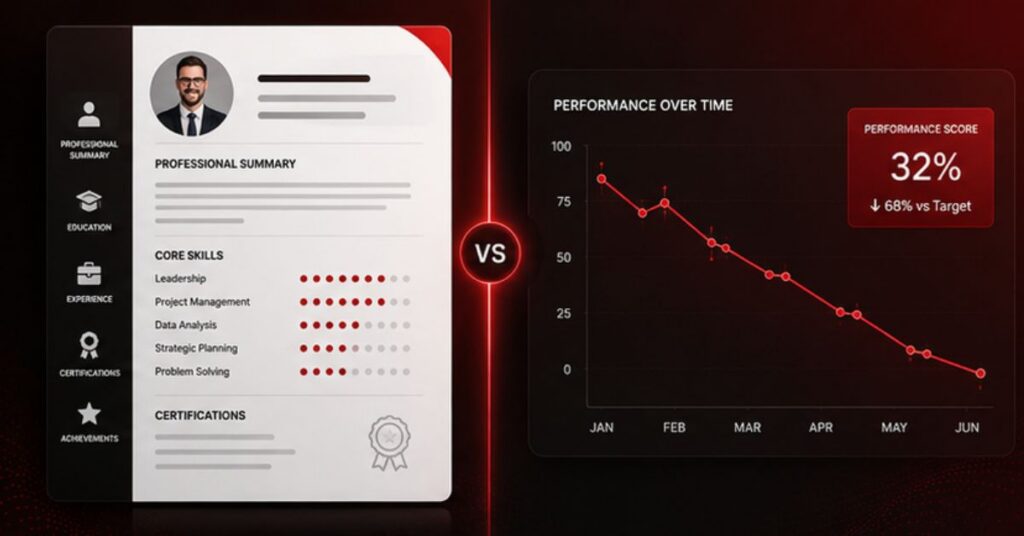
Succession planning fails when it is built on visibility rather than evidence. The people most likely to be nominated as future leaders are often those who speak loudest in meetings, network well with senior stakeholders, or hold roles closest to the top of the org chart. That is not leadership potential. That is proximity to power, and it is costing organisations their strongest future talent.
Why Most Organisations Get This Wrong
Decades of research in organisational psychology show that affinity bias, recency bias, and a consistent tendency to confuse current performance with future potential heavily influence manager nominations. The result is a succession pipeline that looks credible on paper but breaks down when leaders face real tests.
46% of newly promoted executives fail within 18 months of taking on a leadership role. This is not primarily a skills gap. It is a potential gap. Organisations promote high performers into roles that demand a fundamentally different kind of capacity: managing ambiguity, leading through others, navigating organisational complexity. Nobody assessed those traits before promotion.
Filling a leadership pipeline requires more than identifying high performers. Organisations need people whose work style, capacity for growth, and leadership orientation match what the next level actually demands. Deliberate, structured assessment delivers that. Informal observation does not.
What Science Identifies as the Predictors of Leadership
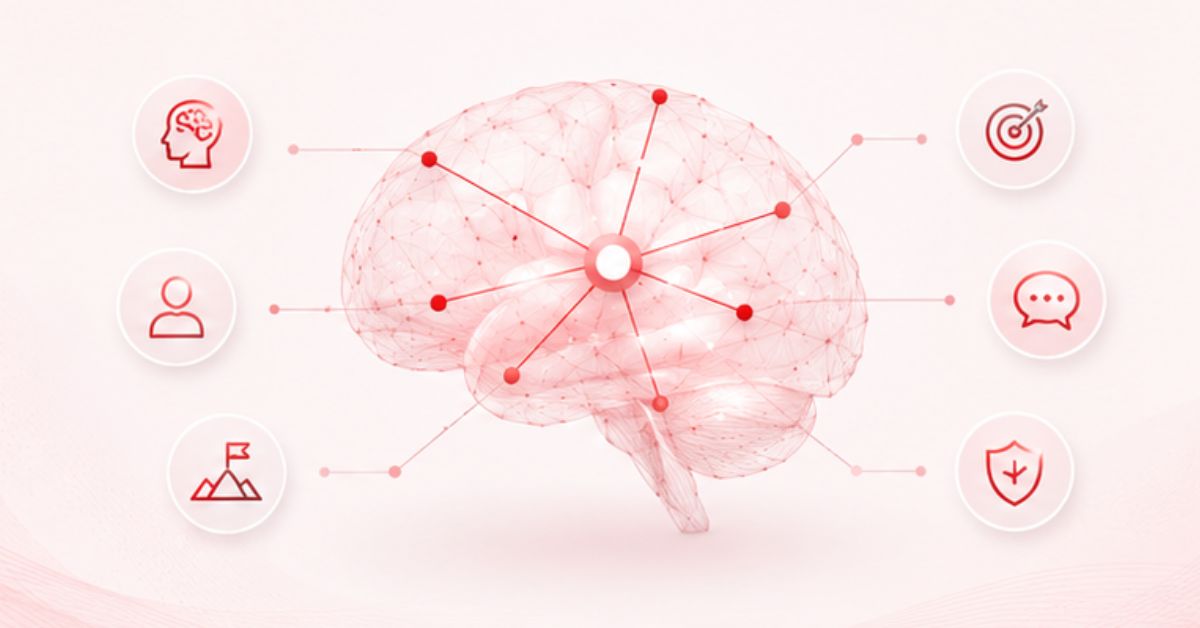
Decades of organisational psychology have produced a clear picture of the traits that predict leadership effectiveness. These are not the traits most visible in a performance review. They are measurable, predictive, and often invisible to daily observation.
- Cognitive complexity: Effective leaders deal with ambiguity, synthesise information from multiple sources, and make decisions with incomplete data. Cognitive ability is one of the strongest predictors of both leadership emergence and leadership effectiveness. This is not about being the most technically expert person in the room, it is about the capacity to hold complexity and act decisively within it. Cognitive Ability Profile can provide an objective, norm-referenced baseline for this critical trait.
- Learning orientation: The best leaders are not those who have all the answers, they are those who find better answers faster than anyone else. Learning agility can be the key differentiator between executives who derail and those who continue to advance. Learning agility, defined as an individual’s willingness and ability to acquire knowledge from experience and apply it in future situations, is a primary indicator of leadership potential. A Learning Agility Profile can help assess how effectively someone adapts, learns, and performs in unfamiliar or changing environments across dimensions such as People Agility, Mental Agility, Results Agility, and Change Agility.
- Emotional regulation: Leaders set the emotional tone for their teams. A leader who escalates under pressure, avoids difficult conversations, or responds to challenges with defensiveness undermines team performance regardless of strategic skill. Goleman’s research on emotional intelligence found that it accounted for nearly 90% of the difference between average and star performers in senior leadership positions. Emotional regulation is measurable through personality assessment, and it is not something that shows up reliably in interviews where candidates are at their most composed.
- Influencing through credibility: Future leaders show an early tendency to move people through ideas rather than authority. They build alignment across functions, manage upward and sideways, and create conditions for others to perform. Behavioural competency assessments can help evaluate capabilities linked to leadership readiness, including influence, communication, and stakeholder engagement.
- Drive, accountability, and tenacity: Leadership demands sustained motivation in the absence of external reward. Perseverance and passion for long-term goals are more reliable predictors of success in demanding professional environments than talent alone. Assessments focused on grit and goal orientation can therefore provide valuable insight in leadership identification and development processes.
Why Informal Pipelines Fail
The informal leadership pipeline, where managers nominate high performers they personally rate, fails for a predictable set of reasons, none of which are unique to any single organisation.
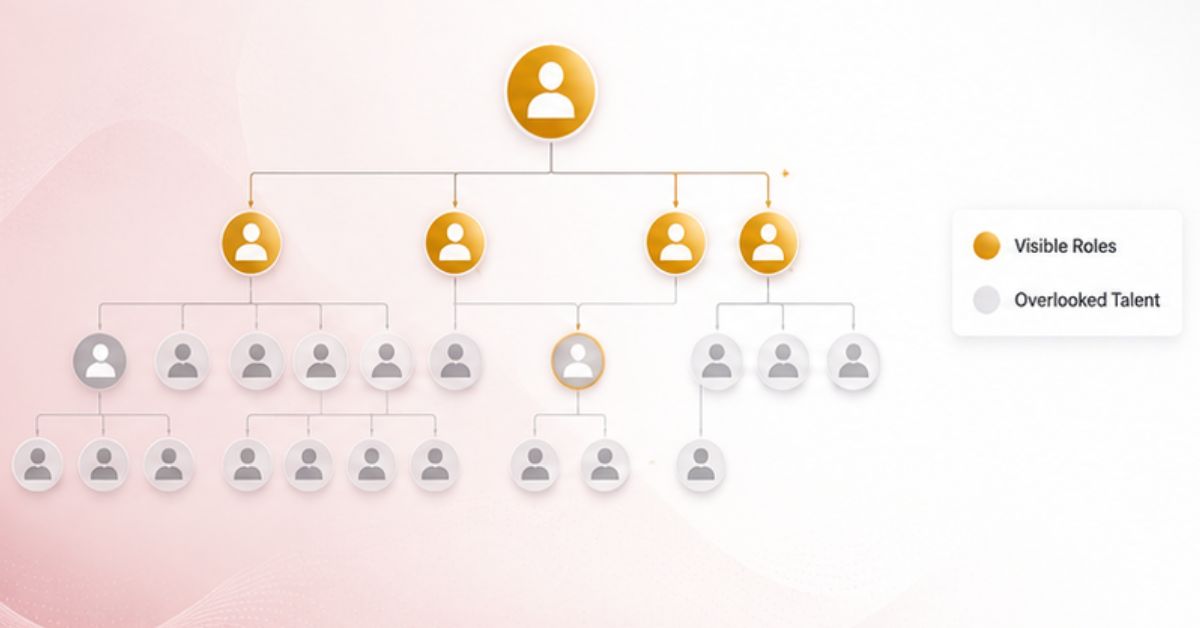
First, it over-represents employees in visible roles. A high-potential employee in a technical or back-office function is significantly less likely to be nominated than a moderate-potential employee in a commercially visible role. Simply because the latter is more frequently in front of senior leadership.
Second, it confuses performance with potential. The employee who delivers excellent results today may lack the cognitive complexity, emotional range, or influencing capacity to lead a team through a major organisational change in three years. Current performance predicts future performance in the same role, not in a fundamentally different one.
Third, it lacks consistency. Without shared criteria and standardised measurement, 20 different managers apply 20 different standards. The pipeline reflects subjective judgement, not objective assessment of readiness.
The Chief Learning Officer Business Intelligence Board found that 8% of organisations spend over $10,000 annually per person in leadership development. That investment only pays off if you are developing the right people, identified through a process that goes beyond who is most visible to the people making the investment decisions.
Building a Scientific Leadership Identification Process
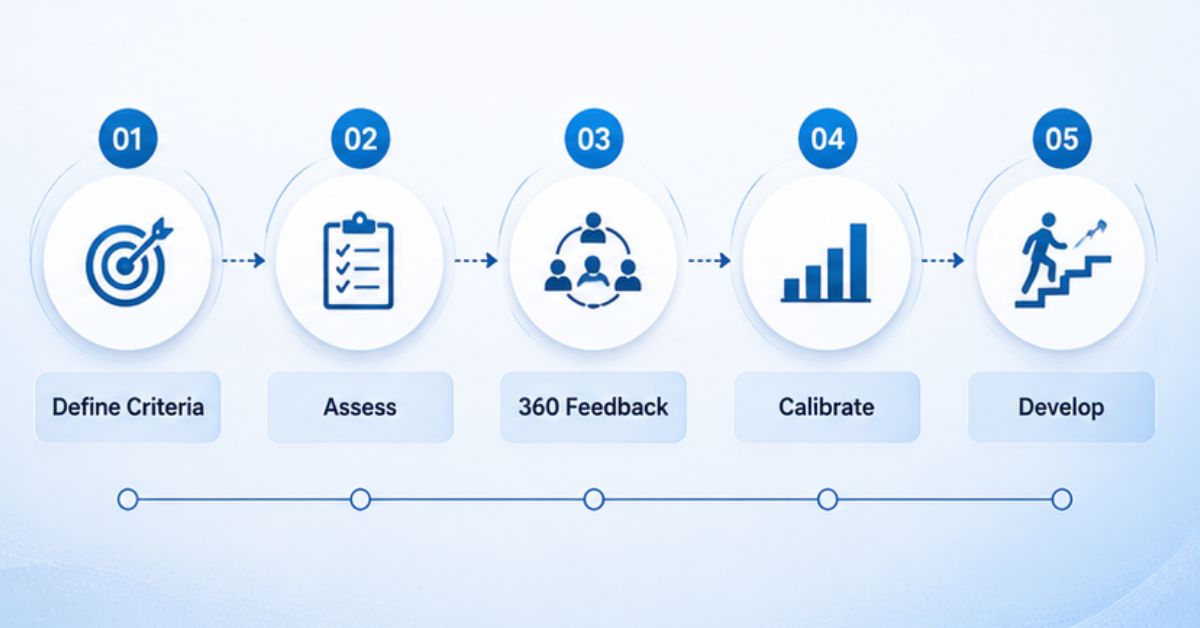
A robust, evidence-based process combines structured data collection with calibrated human judgement. Here is what that looks like in practice:
- Define leadership criteria for your context: Before assessing anyone, agree on what leadership looks like in your specific organisation. The traits that predict success in a fast-growth technology business differ from those in a regulated financial services environment. Define the competency framework first, then assess against it, not the other way around.
- Administer validated psychometric assessments: Use tools designed for leadership prediction, not generic questionnaires. Assessments covering cognitive ability, learning agility, grit, personality, and job fit can provide a far more comprehensive understanding of leadership readiness than interviews or performance reviews alone. Used together, they provide a multi-dimensional view of leadership readiness that no single tool delivers alone.
- Combine with 360-degree feedback: Assessments measure traits and potential. Structured 360-degree feedback provides evidence of how those traits manifest in actual behaviour, as observed by peers, direct reports, and senior leaders. Multi-rater feedback tools can help evaluate workplace competencies across different perspectives, offering a more complete view of leadership effectiveness and development areas.
- Apply calibration: Once assessment data is collected, bring leadership teams together to review talent using a consistent framework. Calibration sessions remove individual manager bias and ensure succession decisions are made with shared standards and full information. Without calibration, the data exists, but the bias persists.
- Build individual development plans: Identifying future leaders is worthless without a structured plan to accelerate their readiness. Development must target the specific gaps the assessment process identifies. Not a generic leadership programme that the same 20 people attend every year regardless of what they actually need.
Key Takeaways
- Manager nominations are insufficient for leadership identification, they reflect proximity and recency, not potential.
- Science-backed predictors include cognitive complexity, learning agility, emotional regulation, influencing capacity, and tenacity.
- 46% of newly promoted executives fail within 18 months, primarily due to unassessed potential gaps, not skill deficits.
- A reliable process combines validated assessments, 360-degree feedback, and calibrated talent review panels.
- Leadership identification only delivers value when it drives targeted, individualised development.
Build a Succession Pipeline Grounded in Evidence
The difference between organisations with strong leadership pipelines and those that constantly scramble to fill senior roles is not luck. It is process. Specifically, it is whether leadership identification is treated as a science or as a social exercise shaped by who is most visible and best liked.
GoPick’s assessment suite brings scientific rigour to this challenge. It combines tools that measure cognitive ability, learning agility, tenacity, leadership behaviour, and overall job fit. Together, they build a defensible, data-driven framework for identifying who is ready to lead. Who needs investment to get there. And who is better placed elsewhere. The consultation is free. The recommendations are specific, not generic.
Explore our Assessment Solutions:
https://gopicksolutions.com/assessment-solutions/
Speak with an HR Solutions Consultant:
https://gopicksolutions.com/contact-us/